The Travel Earth story

A game of wildlife,
discovery, and strategy.

Collect the world. Learn the animals. Protect the planet.

Our story

Curiosity is where the adventure begins.

Travel Earth TCG is a wildlife trading card game built around a simple idea: learning about the natural world can be part of an exciting game. Through collectible Animal Cards, real-world statistics, and strategic decisions, Travel Earth invites players to explore the diversity of life on Earth and develop a deeper appreciation for the species that share our planet.

The game brings together three connected experiences: collecting animals, learning their stories, and discovering how their different strengths can shape a matchup. Its identity is rooted in curiosity, a love of wildlife, and a desire to inspire people to protect nature.

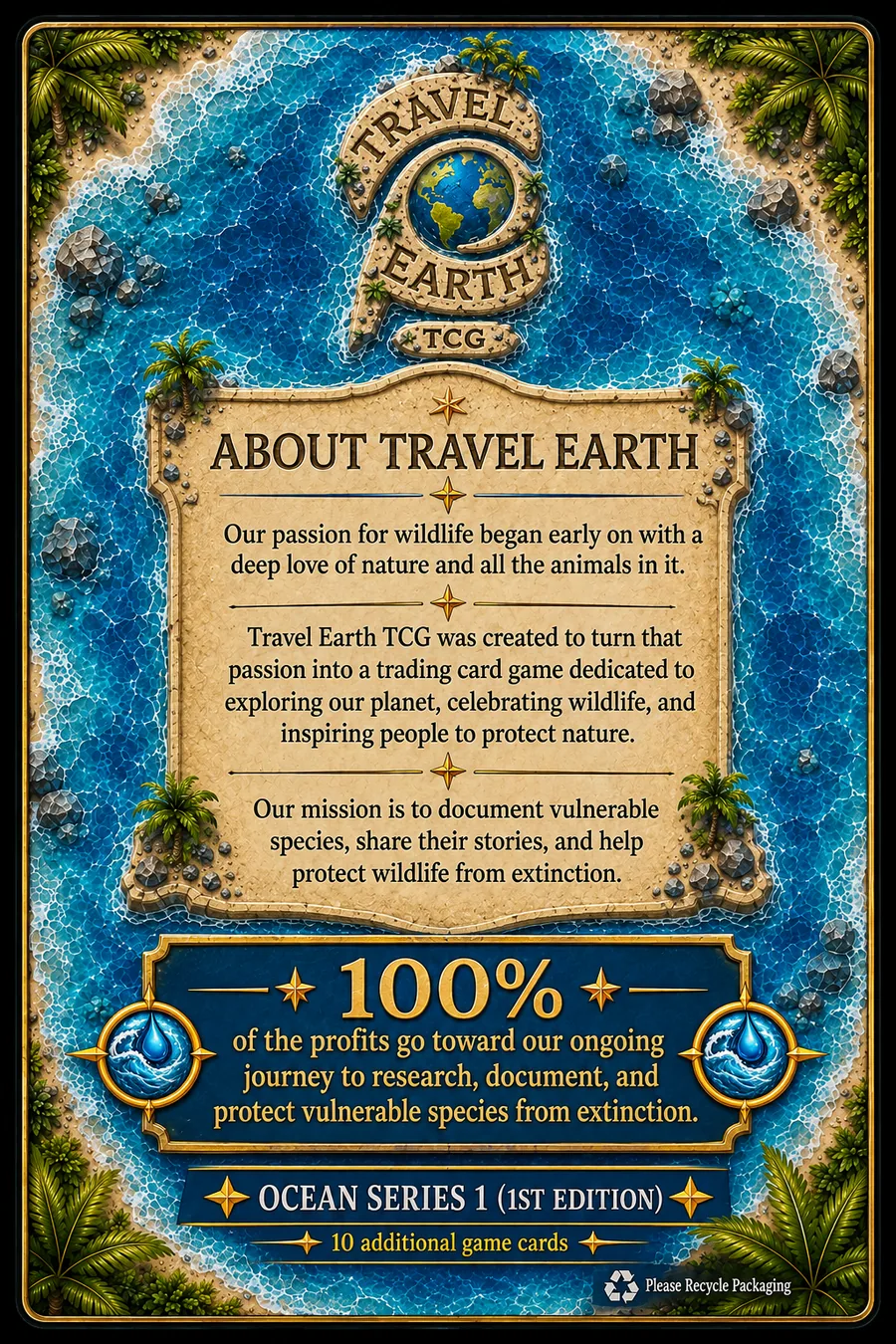
Travel Earth Ocean Series About card, featuring the globe logo, ocean artwork, and conservation mission
The spirit of Travel Earth, captured in the Ocean Series artwork.
The inspiration

A lifelong passion for the natural world.

Travel Earth began with a lifelong passion for nature and animals. That interest grew into a vision for a trading card game that could celebrate wildlife while encouraging exploration, education, and conservation.

Each Animal Card represents a real species. The animals themselves provide the foundation for the game: their size, speed, longevity, population, and geographic distribution become part of the decisions players make.

Travel Earth encourages players to look beyond an animal’s appearance or reputation. A familiar species may have an unexpected advantage, while a lesser-known animal may become a memorable discovery. Collecting and playing create opportunities to ask questions, compare species, and learn more about the world.

The first collection

Ocean Set S1: 100 Animals to discover.

The first collection, Ocean Set S1, features 100 Animal Cards representing marine wildlife.

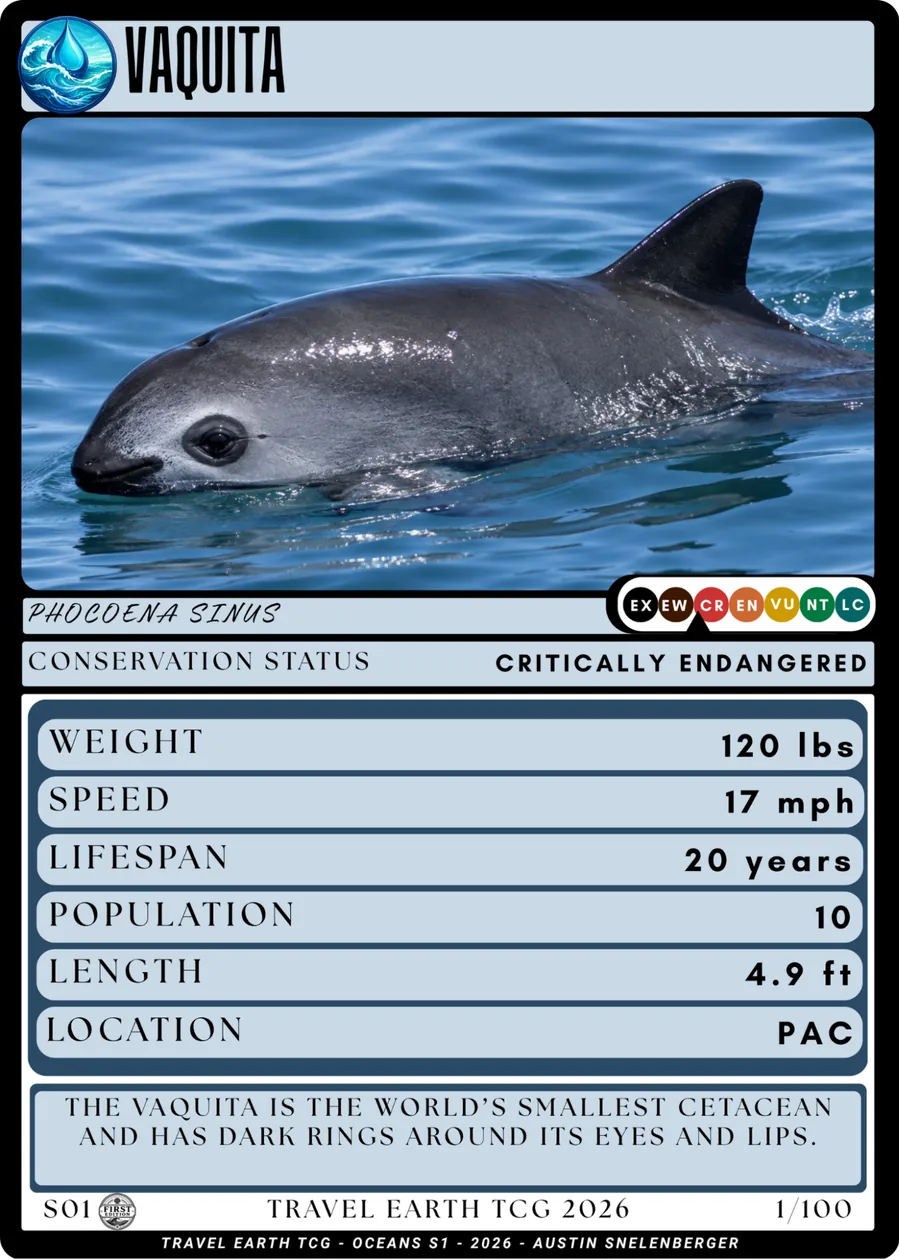
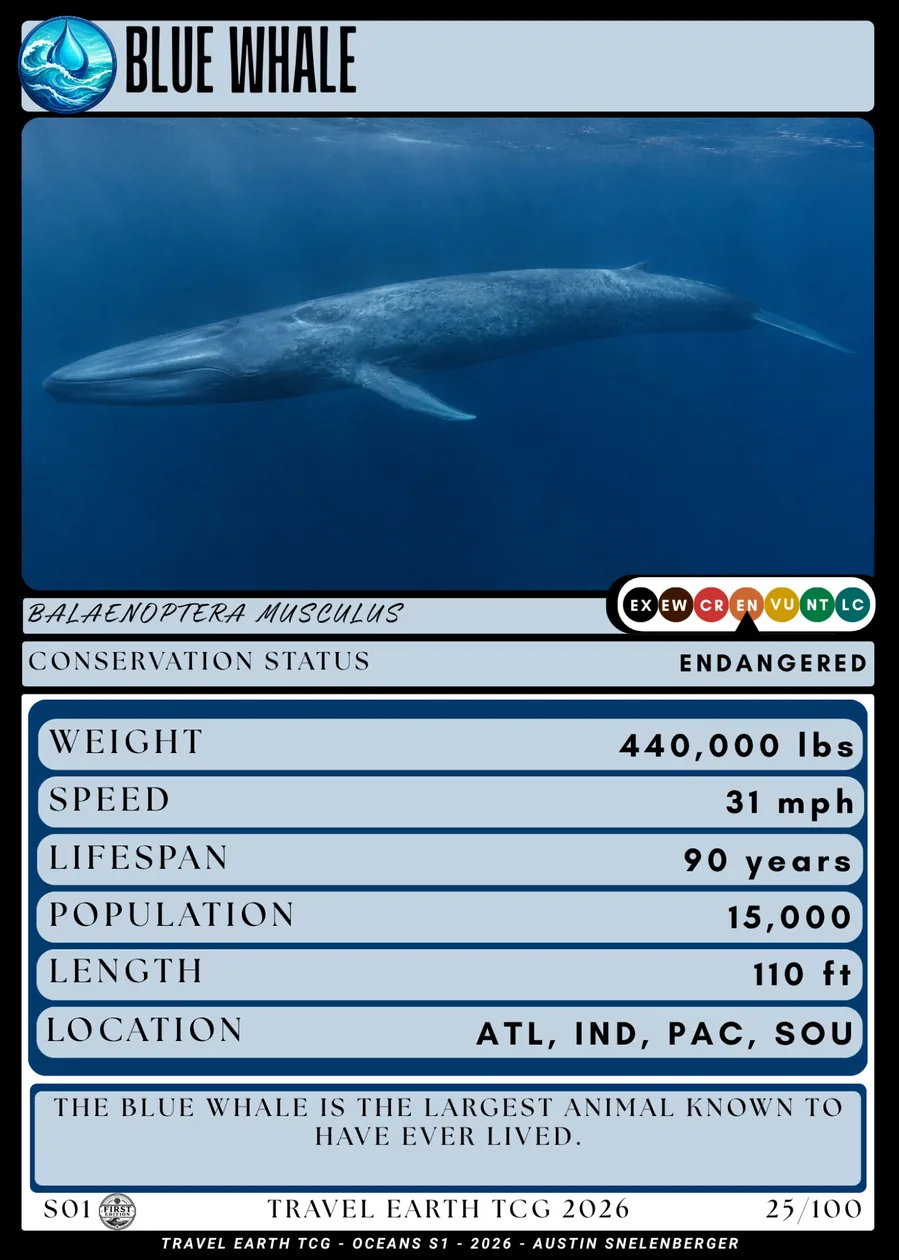
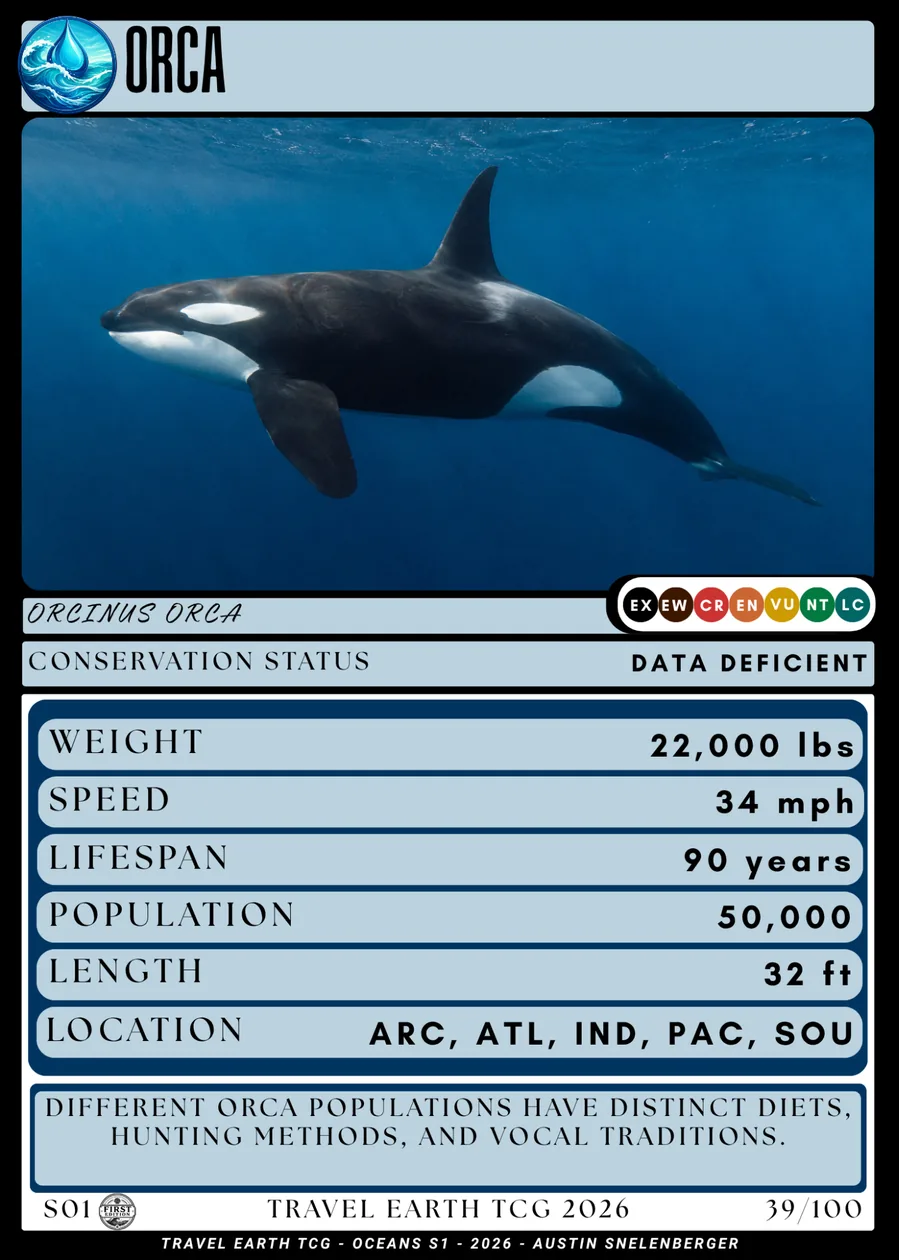
The collection includes animals such as the Vaquita, Blue Whale, Orca, Whale Shark, sea turtles, penguins, corals, jellyfish, and smaller ocean organisms. Together, these species introduce players to the variety of life found throughout the ocean.

Cards combine animal artwork with gameplay values and educational information. Collector numbers help organize the collection, while the First Edition identity marks the beginning of Travel Earth’s card-game journey.

The ocean also shapes the game’s visual style. Turquoise water, sandy textures, tropical greenery, gold borders, and compass details create a sense of exploration. The Travel Earth logo places a globe at its center, reinforcing the connection between the game and the planet it celebrates.

Vaquita Animal Card
Vaquita
Blue Whale Animal Card
Blue Whale
Orca Animal Card
Orca
Explore all 100 Animals
How the game works

Build your field. Choose your moment.

Travel Earth TCG centers on building a field of Animals, managing a limited Reservoir, and choosing when to challenge an opponent.

Players begin with three cards in Hand. Player 2 receives one unknown, face-down card from the top of their Deck as a starting Reservoir resource. Both players then follow the normal turn sequence, including Player 1 drawing on their first turn.

At the beginning of a turn, Resting Animals become Ready and Empty Reservoir cards become Full. Players draw according to their Hand size, may add one card from Hand to their Reservoir, and then play Animals before declaring their Challengers.

The field has no maximum number of Animals, but the Reservoir is limited to six cards. This creates a balance between building a larger field and having the resources to use it.

Six ways to compare Animals

Challenges use six battle statistics:

  • WeightHigher wins
  • SpeedHigher wins
  • LifespanHigher wins
  • PopulationLower wins
  • LengthHigher wins
  • LocationMore locations win

These comparisons allow different Animals to succeed in different situations. Size alone does not decide every challenge. Players must consider the chosen statistic, the opposing Animal, and the resources available to both sides.

The Reservoir

The Reservoir is a central part of Travel Earth’s strategy.

Each Challenger requires one Full Reservoir card, which becomes Empty as its challenge resolves. Empty cards refresh at the start of their owner’s next turn.

Reservoir cards also support defensive decisions. A defending player may permanently discard a Full or Empty Reservoir card to change to another eligible unused statistic. This can turn a losing comparison into a winning one, but it reduces the resources available for later turns.

Players must continually weigh immediate protection against future options.

Ready and Resting Animals

Animals occupy two rows: Ready and Resting.

Ready Animals can challenge or defend. Newly played Animals enter Resting, which means they can defend immediately but cannot challenge that turn. Surviving Challengers also become Resting.

Defending while Resting carries a penalty. If a Resting Defender wins, both it and the Challenger are discarded. If it loses or ties, only the Resting Defender is discarded, and the surviving Challenger becomes Resting.

This gives players a way to protect themselves even when their Animals are not Ready, while making the timing of challenges an important decision.

Committing to a challenge

Players declare their entire Challenger group before resolving any challenges. Once declared, that group is locked.

Each Challenger resolves individually and requires its own Full Reservoir card. Players cannot add another Challenger after seeing the results of an earlier matchup.

This rewards planning: committing more Animals may create pressure, but it also spends resources and leaves surviving Challengers Resting.

Last Resort and the end of the game

When a player has no Animals anywhere on their field, the Reservoir becomes their final defense through Last Resort Sacrifice.

Random Reservoir cards are revealed to defend against the Challenger. If a Last Resort Animal wins, it returns face down to the Reservoir and is shuffled back in. If the Reservoir is exhausted without stopping the Challenger, the defending player loses.

An empty Reservoir alone does not cause a loss while field Animals remain available to defend. Running out of Deck or Hand cards also does not automatically end the game.

Players draw only the cards remaining in their Deck and never reshuffle the Discard Pile into it. When drawing is no longer possible, play continues with the Animals and resources already available.

Read the complete play guide
Collecting with purpose

A connection that goes beyond the cards.

Travel Earth TCG is designed to make collecting an opportunity for discovery.

An Animal Card can introduce a species, invite a closer look at its characteristics, or spark interest in its place in the natural world. The collection gives players a shared starting point for conversations about wildlife and conservation.

Our commitment: 100% of profits go toward the ongoing journey to research, document, and protect vulnerable species from extinction.

That mission connects the game to the passion behind its creation: exploring the planet, sharing wildlife stories, and encouraging people to care about the future of the natural world.

The journey continues

A game continuing to grow.

Travel Earth’s current rules have developed through discussion, refinement, and playtesting. Changes to starting Hands, Reservoir resources, defending, and turn structure reflect the effort to create a clear and engaging experience.

Ocean Set S1 establishes the game’s first collection and its central identity: real animals, meaningful comparisons, resource management, and a spirit of discovery.

At its heart, Travel Earth TCG invites players to build a collection, develop their strategy, and become more curious about the living world.

Collect the world.
Learn the animals.
Protect the planet.